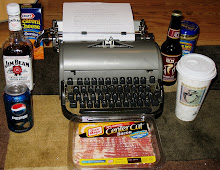
Monday, March 19, 2018

A (satirical?) take on conspiracy theories

"There is no such thing as paranoia. Your worst fears can come true at any moment."
- Hunter S. Thompson

I don't believe in conspiracy theories. The good ones tend to involve enough people that there's just no way someone wouldn't slip and say something, thus blowing the conspiracy. For most they're a diversion, an exercise in entertainment. Others truly and honestly buy into them for reasons only they know. While I choose not to live in Conspiracyland, sometimes I feel like I can see it from here.

Like with the gun issue. I can envision a series of events, ending in court, whereby the average person's ability to buy and keep an assault rifle is revoked. It's far-fetched, but I can see it. Apart from the uproar this would cause among certain (but not all) gun owners, gun manufacturers will not be happy because eventually it would remove a revenue stream. What to do while that scenario played out? One might push the idea of arming teachers and other school staff as a way to "protect the children." It could be tied in with a broader good guys vs. bad guys notion that plays to our Old West nostalgia. To push that narrative even further, maybe cities could be flooded with guns to be used for conflict between groups that have more in common than they don't but that are conditioned through economics and social policy to see each other as competitors. The carnage could be highlighted to illustrate why guns are needed for protection. Just like that there'd be a whole new market for gun sales, and the financial effect of an assault weapons ban would be mitigated.

Sticking with schools, let's say one favors charter schools. Perhaps one even thinks public education itself is socialist and should be abolished in favor of straight-up private schools paid for with vouchers, or better yet, out-of-pocket. Reasonably, one might argue, schools should be run like businesses and their success or failure should depend entirely on the market. Good educational outcomes would lead to more business. Naturally, corporate entities would form to serve this educational market on a broader scale, creating investment opportunities for those with capital. One downside is that a lot of people still believe strongly, or at least have a notion that profit motive may not be the best driver of educational outcomes. And there is the issue James Howard Kunstler calls the psychology of previous investment, which is the reluctance to abandon things in which we've made large investments of time and money – i.e. the infrastructure of "the public school system". That's a lot to overcome.

A two-pronged approach to alter public opinion over time might consist of methodically demonizing public school unions – and by association, teachers – and slowly ratcheting down funding for public schools to the point where they can't fulfill their mission. A side strategy to rile up the teachers so as to paint them as extremist and out-of-touch with regular people would be to cut their promised benefits, including retirement and health coverage, so they angrily demand compensation that most people in the private sector don't receive. Those benefits, which include money teachers contributed, could be re-labeled "entitlements." From there it wouldn't be difficult to extend the same strategy to all public employees and even the military.

Once the entitlements beachhead is established, it's possible to open another front, this one against the social safety net – Social Security, Medicare, Medicaid and other programs. One would start, of course, with Medicaid by painting it as an entitlement demanded by lazy people who prefer to loaf while everyone else works. Then, perhaps playing on the similarity between the two names, start calling Medicare an entitlement, too. Portray Social Security as a bloated bureaucracy that can't be sustained in its current form.

These programs are popular, though, and public resistance to change could be even stronger than with schools. Systematically cutting funding, thereby making the programs less effective, and suggesting the federal employees who administer them include the corrupt, the lazy or the leftist could chip away at public opinion over time. Then one might propose shifting management away from the federal government to the states, giving them more "flexibility." Finally, broach the idea of "fixing it" by privatizing the entire system, which will seem outrageous at first but gradually the shock will wear off and what will be left is a psychological association between these programs and the word "privatization," which through the same drip-drip marketing strategy becomes synonymous with "effectiveness."

It could all work because unions do tend to overreach when it comes to advocating for their members and because some percentage of people are corrupt and lazy and leftist and so it stands to reason that examples can be found among public sector workers and benefit recipients, too. Stories about these examples would need to be emphasized disproportionately in relation to their occurrence.

And lo, there is an app for that. Social media has given all of us a conduit to explore, reaffirm and exploit our natural fear of "others," our distrust of authority and our prurient interests. The weirder and more outrageous the story, no matter how isolated, the better for sharing. And those stories can now be amplified almost instantly, far faster than truth can be discerned, thanks to the use of devices we carry with us all the time. Anonymity has bred internet bravado when it comes to saying terrible things about one another, and our admirable embrace of the right to speak freely opens an unlimited access highway down which practically anyone with almost any view can travel nearly unimpeded. Naturally some people will take advantage of this vital freedom of speech to say vile and hateful things and degrade others to serve their own agendas, or even just for fun. Throw in some way to measure how people feel about all of it, through up or down votes, how often a message is spread or the use of funny faces, and make all that public, too, and the internet becomes a giant popularity contest competing for eyes and likes (or dislikes).

Exploiting our inherent vanity in this way would turn out to be useful in promoting some of these ideas. And the repetitive feedback loop is also the perfect tool for turning once-outrageous ideas into dogma over time.

Of course it wouldn't be long before larger entities like state actors or large private interests began seeking to influence people through these means for their own interests, most likely monetary. Once money gets involved as a motivation it's Katy bar the door in terms of distinguishing news from opinion and true sentiment from marketing.

Then truth dies and we begin searching for some way to retrieve it, or at least revive our faith that a truth exists in some form. Into that void might step various people or entities professing to speak The Truth either as they see it or as it has been imparted to them through means we may not access or understand. And the cycle starts again.

But I don't believe in conspiracy theories. So probably I don't believe any of this is happening.

Friday, June 3, 2016

On clarity of writing, the purpose of journalism, and tronc

"Everyone will now be mobilized and all boys able to carry a spear will be sent to Addis Ababa.
Married men will take their wives to carry food and cook.
Those without wives will take any woman without a husband.
Women with small babies need not go.
Those blind, those who cannot walk or for any reason cannot carry a spear are exempted.
Anyone found at home after receiving this order will be hanged."

- Haile Selassie's 1935 Mobilization Order

UPDATE 6/18/18: tronc realizes its own ridiculousness.

Below is the internal memo former Tribune Publishing (now tronc) CEO Justin Dearborn sent to company employees on June 2. In it he's announcing a "rebranding" of Tribune Publishing into a "content curation and monetization company" called tronc (all lowercase). tronc stands for tribune online content. tr-on-c. The Tribune's motto used to be "World's Greatest Newspaper." It hasn't been great for some time now, but at least the phrase was aspirational. If nothing else it was a goal. What goals can we discern from Dearborn's memo?

There's "creating and distributing premium, verified content," which doesn't exactly stir the souls of journalists or readers. Whoops! I mean content creators and consumers.

Or how about "leveraging artificial intelligence and machine learning to create an interactive and customized user experience to benefit our 60 million monthly users"? Sexy, huh? God, it just makes me want to curl up on my straw mat by an electric fire, drink some kale juice and interact with my digital experience. Just like the old days.

And what of the name, tronc?

The thing from which it's derived isn't even worthy of capitalization, apparently. "tribune online content." Really we had to shorten that? And what's wrong with the words "Tribune" and "publishing?" That's what Tribune Publishing was – an electronic and print publishing company. That seems to be what it still is. Is the word "publish" so tainted by its association with "print" that it must be banished? Is the name "Tribune" so tied to a mediocre newspaper that … well, let's not pursue that line of reasoning.

As with so much in business today, this rebranding is just smoke and mirrors. They could have continued to call it Tribune Publishing and made the shareholders happy by saying they were going to fire more journalists and use computers to generate content, which is kind of what it sounds like TribCo is going to do. Why go to the trouble of digging through all those Kool & The Gang albums

to find the perfect retro font for the logo and the expense of hiring a consultant to program this Rube Goldberg strategy for getting information to people? Just issue a statement that says "To reduce costs and increase dividends to make shareholders happy, we are going to push the digital thing going forward. Eventually we hope to have mostly computers and just a handful of people producing information. Maybe someday it will be all computers. Please buy some of our stock. And an online subscription. And click an ad. Thanks."

That's at least way more to the point than this murky ramble Dearborn – or his AI doppelganger – produced. But murkiness is the investor relations person's friend. Using language for obfuscation, as opposed to enlightenment, is considered good business strategy. Unlike Selassie's call to arms after Italy's invasion of Ethiopia in 1935 – one of the clearest communications you will ever see – there is ample room for interpretation and debate over meaning and intent in Dearborn's memo.

And anyway the goal of Dearborn's note isn't to inspire journalists or entice subscribers. Its purpose is to comfort investors. Early in the trading day after the announcement, investors didn't seem comforted. Tribune Co.'s share price fell 3.4% to open trading on June 3.

I don't pretend to know how to arrest the decline of newspapers and other print media, and I don't know how to generate more advertising or subscription revenue. I think part of the problem with online advertising is that all the page takeovers, flash media and auto-play videos are supremely annoying. People refuse to click on them out of spite. Plus, not enough people are interested in what these pimps are selling. I don't want a personalized cloud technology recommendation from Microsoft and I'm not going to buy insurance from State Farm based on its blinking tower ad on the Tribune's home page. Maybe start charging people to comment on stories. That might work. You want to deposit your particular brand of snark and anonymous internet bravado at the bottom of the story about the Cincinnati Zoo mom? Pony up $1.

Meanwhile, I was struck recently by a prospectus from 1852 for a now defunct newspaper – the Frankfort Mirror. Note how the name clearly says what the thing is to be. Compare its aspirational tone with the rebranding memo below. I'd be interested to read your thoughts on the similarities and differences between them. And for now, Blogger won't even charge you $1 to tell me.

Internal memo to tronc employees from CEO Justin Dearborn:

Colleagues,

Today, I am pleased to announce another important step in our transformation – the renaming of our Company to tronc, or tribune online content. At our core, we remain a content curation and monetization company focused on creating and distributing premium, verified content across all channels. This rebranding acknowledges our important evolution as a company and captures the essence of our vision for the future.

Tribune Publishing has a proud history, with iconic brands that remain the core of who we are. But as we are all well-aware, the media industry is shifting rapidly, and the path to success requires an innovative new approach and a fundamentally different way of operating.

We are embracing this evolution with open arms and executing a transformation strategy focused on leveraging artificial intelligence and machine learning to create an interactive and customized user experience to benefit our 60 million monthly users. It has been a busy time – in just a few short months, we have already made significant progress, including:

  • Reorganizing the business into new operating and reporting units to increase transparency and drive corporate focus;
  • Launching troncX, our content curation and monetization engine, which combines our existing assets with new artificial intelligence (“AI”) technology to accelerate our digital growth; and
  • Partnering with Nant Capital and Dr. Patrick Soon-Shiong to accelerate the transformation from a legacy news company to a technology and content company.

    Renaming the Company is the logical next step in this journey and underscores our commitment to completely transform the business – and the industry – and to continue to best serve our readers and the communities in which we operate.

    We will be communicating with you often over the coming weeks about the mechanics of the transition process. Importantly, this change does not impact the name of our proud and iconic brands.

    As part of this announcement, we also announced that the Company will be transferring its stock exchange listing from the New York Stock Exchange to the Nasdaq Stock Exchange. tronc shares are expected to begin trading as a Nasdaq-listed security under the new ticker symbol “TRNC” on June 20. Nasdaq is the home to many other leading innovators and technology companies, providing the ideal platform for tronc shares.

    Separately, you may have also seen that our Annual Meeting of Shareholders was held earlier today in Los Angeles. We are pleased to announce that shareholders elected all of the Company’s nominees. On behalf of the Board, we are grateful for the support of our shareholders, and look forward to continuing to serve their best interests as we execute our strategic plan.

    Importantly, the majority of voting shareholders rejected Gannett’s symbolic, feeble and expensive withhold campaign. We cannot speculate as to what Gannett may choose to do as a result of this rejection, but the best thing we can do is to stay focused on the important work we have underway. I sincerely hope that the Gannett shareholders begin to express their displeasure to the Gannett Board regarding the corporate waste that has been perpetrated these past six weeks with their massive spend on this emblematic campaign. Gannet’s interest in our Company only reinforces the high value of our innovation and strategic vision.

    This is an incredibly exciting time as we continue to transform our Company and industry. As we start this new chapter as tronc, I want to thank each of you for the hard work and dedication that has allowed us to create a better future for our Company.

    Thank you for all that you do.

    Best,
    Justin Dearborn

  • Sunday, December 27, 2009

    Knee Surgery Recovery

    I’ve been watching the snow come down all day. It’s not a hard snow, just a steady stream of fat flakes drifting diagonally through the air and piling up in a fluffly white ground cover. This is the same storm that caused blizzards to the south and west of Chicago. Here, though, just a nice, steady snowfall.

    Here inside, where it’s warm, I have been marvelling at the ability of the human body to withstand and recover from trauma. I had knee surgery on Dec. 3. I tore the anterior cruciate ligament in my right knee this past spring, and the pain and discomfort were to the point where not having surgery wasn't a good long-term option. Sometimes the knee would just wobble, or nearly give out, walking down stairs or stepping off a curb. There were other sharp pains that I later learned were associated with tears in my meniscus. Occasionally the knee felt like it was on the verge of locking up, with shooting, pinpoint pain somewhere deep inside. When that happened, I would shake my knee from side to side, which seemed to help. I learned later the shooting pain was from a flap of meniscal tissue that would make its way into places it shouldn't. The shaking often moved the flap back into place. Again, not a good long-term solution.

    During the week after the surgery, my knee looked and felt like the doctor had inserted a tiny mixer and flipped the switch to "whip." Obviously the surgery was much more intricate than that. The doctor replaced the ACL with a ligament from a cadaver and trimmed the torn pieces of meniscus. As the knee has healed I give the doctor a great amount of credit with conducting a skillful procedure that has improved quickly; the word I have used repeatedly is: exponential. Every day starting on the day the doctor removed the Ace bandage and told me I didn't need a brace, the thing has experienced more flexibility, less pain and less swelling than the day before. Today I experienced a huge breakthrough during a hamstring stretching exercise wherein I lay on my stomach on the bed with the edge of the mattress about mid-thigh. After five minutes, as I slid off the bed, my right knee popped. There was initial pain, but then huge relief. Must have broken through some scar tissue or something, because it feels better today than even some days pre-surgery.

    Here are two photos, one taken six days after surgery and one taken today, 17 days later.

    My right knee still looks bad, still swollen and the incisions are still healing. There's also not a lot of definition. When your leg is basically hanging on your body for two weeks, not doing any work, that's what happens. The left leg is starting to get agitated. It's tired of doing all the work. "A little help, here!" I can hear it saying to the right.

    If today is any indication, help is on the way.

    Thursday, August 20, 2009

    The Myth of the Golden Turd

    I'm glad I went to journalism school when I did, and learned from the people I did and have had the career I've had. Because with people like Rebecca Maitland and Karen Zurawski around, newspapers will be dead in a decade. And when the corpse is buried I'll be glad to still be above ground, knowing I did it the Right Way.

    This Houston Chronicle episode reminds me of a story my good friend Aaron tells about his first interview with a public relations firm, right out of college. As he's in there with one of the principals, another employee comes in with a quote typed on a sheet of paper. He asks the principal with whom Aaron is interviewing if the principal can just say what's written, so it can be properly described as a quote.

    That's really not a whole lot different from Maitland's approach in constructing quotes and searching for someone to whom they can be attributed. But it gets the job of a reporter exactly wrong. As a reporter you dig, dig, dig for information and in the end you take what you get. If you're lucky and/or good, you get better stuff. If you're lazy, you won't get shit. When someone gives you the perfect quote for your story, but refuses to be named or even let you use the quote, you drop it. Does it suck? You bet. It's like getting handed a gold nugget, only to turn it over and find it's a painted turd.

    But a gold turd is still a turd, and crap is no good. So you go back to work and keep digging. That's how it's done, people. Writing takes work; reporting takes work. Being a journalist is not supposed to be easy. You don't just get to ask your friends or colleagues to say shit and then shop the shit around hoping someone will take it.

    Excuse my language, but this story stinks.

    I don't know anything about Maitland as a journalist, but this is one stupendous lapse in judgment. And it's just compounded by Zurawski, who is supposed to be an editor. The proper response for a newspaper editor, when asked about a reporter who shopped quotes like Maitland appears to have done, is, "That's not how we do things here." Period. End of story. There's no need to sell your reporter out; you deal with it one-on-one, not in the media column of an alternative weekly. But you definitely make it clear that the behavior that was described to you is not how your reporters are expected to conduct themselves.

    This isn't rocket science; it's journalism. I know it's Houston and that with the heat and humidity and the Johnson Space Center so close it might be easy to get confused and think things are more complicated than they really are. But they aren't. It's simple. To paraphrase Durham Bulls skipper Joe Riggins, journalism is a simple game: you report the story, you write the story, you publish the story. Got it?

    Friday, August 14, 2009

    Riding With Respect

    This past spring, I joined the Patriot Guard Riders, specifically the Illinois chapter. I thought about it for several weeks before I signed up. How would I feel participating in such a visible group? Would I have the time to devote to it? Finally I came down on the side of "You know what? What they say is true: One person can't do everything, but we can all do something." And so I joined.

    To me it's not about whether or not I support a particular conflict. I'm not in favor of war. What's important to me is showing respect to these men and women who volunteer to serve in the armed forces and who go where they're told when they're told and do what they're told, no questions asked. I can disagree with the policy, and I often do, but my beef is not with the soldiers.

    And I appreciated the PGR's original mission—to provide a barrier between families mourning dead soldiers and those Fred Phelps-indoctrinated wackos from the Westboro Baptist Church who insisted on protesting homosexuality by disrupting the military funerals.


    For several months after joining I didn't participate in any missions. Either there weren't any soldier funerals (thankfully) or welcome home rides taking place nearby or they were at times when I couldn't get away from work. Finally two weeks ago I was able to go on a welcome home mission for Charlie Company of the 178th Infantry Battalion of the Illinois National Guard. More than 550 bikes showed up on a sunny Sunday morning in Monee, and escorted the 130-plus guardsmen to the community center in downtown Kankakee. I was pretty thrilled to be there and be a part of that. And I was glad it wasn't a funeral.

    Then last night I participated in a welcome home ride for U.S. Marine Cpl. Heath "Beaver" Parvis of Lemont. About 50 bikes gathered in the parking lot of a strip mall at 135th Street and Archer Ave. Cpl. Parvis arrived at about 8:45 p.m. After exchanging hugs with family and friends, he shook hands with anyone else who extended one to him. At about 9:15 we escorted him from the parking lot to the American Legion post in Lockport. It must have been quite a sight for the residents of the neighborhoods the procession wound through and for the drivers we forced off the road. Here were three police cars, two fire engines and 50 bikes riding two by two with their emergency flashers blinking, revving their engines and honking their horns.

    As I rode out of the American Legion parking lot later, several of those gathered for the continuation of Cpl. Parvis' welcome-home party thanked me for coming. It's a good feeling, receiving that kind of appreciation for doing something out of my own sense of appreciation.

    One day I'll attend a funeral, and that will be sad. It's inevitable, living as we do in this state of seemingly perpetual conflict. But for now it's nice to welcome some of these people home. They deserve it.

    Sunday, June 7, 2009

    The Bit Man

    I often complain I never write anything, but that’s not true. I write emails and instant messages all day, every day. Some of my favorite turns of the phrase and most insightful analysis have been contained in brief missives I’ve tossed off in the minutes between projects at work. It’s when I sit down to deliberately compose something that I get fouled up and stuck.

    What’s up with that? As much as I don’t want to admit it, I believe I’m a short-attention-span creature of the ‘80s TV generation. I think in sound bites, movie clips and song lyrics. Gotta break myself out of that….

    Friday, March 13, 2009

    Try

    Just a quickie tonight. The urge to write is strong, but I must sleep soon. I’m flying to Cleveland tomorrow afternoon, and before that I have many Important Tasks to finish at work. Not getting enough rest before flying means the immune system is weakened, and as we all know air travel nowadays primarily involves being sealed in a metal tube with a hundred vectors for god-knows-what sorts of germs and viruses.

    The reality is there simply are not enough hours in the day to accommodate “want to” and “need to.” This evening, for example, I wanted to play my guitar for a while, write something serious about Bernard Madoff and greed and fire off a couple of long-overdue emails to friends. However, I needed to do some dishes, pack, shave and, as I mentioned, sleep.

    I dream of writing successful books–novels and nonfiction. I dream of running an insurgent campaign for mayor of Chicago, and winning. I dream of becoming a good enough guitar player to be able to spontaneously pick up and play should I find myself in an Amstel Light ad.

    I believe now that I’ll get around to all of it. Eventually.

    In the meantime, you know that feeling when you’re listening to music and suddenly you hear the words; I mean really hear them? I had that experience recently listening to Suzanna Choffel, a talented singer/songwriter from Austin, Texas.

    (Aside: Choffel and her band were playing at The Belmont in Austin the first night I was in town last April for CNU XVI. It’s not often you see a xylophone as part of a band, I thought when I walked in. I listened to a couple of songs and was hooked. I asked the bartender downstairs who was playing. He said the regular Tuesday night band wasn’t there, and he didn’t know who was filling in. As it turned out, nobody working at the Belmont that night could tell us who the band was. It took me until Saturday to learn it was Suzanna Choffel, and it was the sound guy working the Afrofreque show at Lambert’s BBQ who finally told me who I’d seen.)

    Anyway, “The Challenge”, one of the songs on Choffel’s album “Shudders & Rings”, contains these lyrics:

    I don't want to finish anything I started; that's the problem with me
    I just want it to be finished as soon as I begin it; I just want it to be.

    Everybody wants to know what my goals are; where I'm going and how far
    But goals are for suckers; me I've got dreams.


    I heard her sing that and I thought, she gets it. Later, on “Try,” she sings:

    What do we have against our dreams
    That we don’t try in every way to make them real?
    It’s like we’re all on automatic
    We don’t want anything new to fear.

    Beneath, I am so bold
    An overlooked dream I just can’t afford.
    I have to look it in the eye … and try.
    I have to look it in the eye … try, try … I try … try … try

    This world is huge, but it can feel so small
    When you put yourself between four walls.
    And all I want to do is go, but instead I just stay here.
    Comfort always lends a hand to fear.

    Goodbye can be so hard to say and hear.
    What do we have against ourselves
    That we don’t want to take each chance that comes our way.
    We just sit here in our fear, thinking someday … someday.


    Then I knew she got it. She’s dreaming and at the same time afraid of her dreams. I’m so there. But what’s cool is she’s singing about it on her album. Dream realized, baby. So what’s the message? The way I hear it, we know what’s holding us back and we are not alone. Overcoming inertia requires work. The challenge is out there, for all of us. The first step toward meeting it, is to try. Stop making excuses and succumbing to “shouldn’t” and “can’t.” Shove “need to” in its place once in a while and indulge the creative “want to.” You may lose that hour of sleep you were hoping for. But out of that loss may come some small thing you’re proud of. Another step forward.

    Sunday, February 1, 2009

    Mackenzie


    Mackenzie: In the world November 1994 – January 31, 2009 … and forever in our hearts.

    “A cat has absolute emotional honesty: human beings, for one reason or another, may hide their feelings, but a cat does not.” - Ernest Hemingway


    “No amount of time can erase the memory of a good cat, and no amount of masking tape can ever totally remove his fur from your couch.” - Leo Dworken

    Yesterday we made the decision to put down our pet cat of 14-plus years, Mackenzie. She had been sick for months, unable to keep food down. She had lost a couple of pounds just since Thanksgiving. She was not well, she was uncomfortable. We could have taken measures to prolong her life, but they would not have been in her best interest, they would have been in service to our selfish refusal to let her go.

    Kim and I spent the day yesterday recovering from the agonizing hour-and-a-half at the veterinarian’s office. After discussing her condition with the vet, we made what we felt was the right decision for Mackenzie. After we told the staff, someone came and taped two paper towels over the window in the door to the small room where we sat with Mackenzie. The vet administered a strong sedative while she lay in her cage, curled in a corner on her favorite green blanket. A while later, the vet moved Mackenzie and the blanket onto a metal table and lay her on her side. At about 12:20 p.m., the vet injected into a vein in Mackenzie’s back leg a pink fluid that was essentially an overdose of anesthesia. She monitored the cat’s heart rate with a stethoscope, and at 12:27 pronounced that Mackenzie had passed.

    The one eye we could see was still open, but all the mischievousness and curiosity we’d loved and at times feared had faded. That was it. Fourteen years slipped out of our grasp.

    I think “numb” pretty well describes how we spent the day. Today I have been more reflective. I am empty, drained of energy and also fluids from crying. This post is part of my grieving.


    “I love cats because I enjoy my home; and little by little, they become its visible soul.” - Jean Cocteau


    People who read this who have also lost loved ones–people, I mean–might say “it was just a cat.” And she was. But since November of 1994, not a day has passed when Mackenzie wasn’t a part of our lives.

    There are so many stories – little moments of joy that are now bittersweet, that in fact make me cry as I sit here thinking about them. For 14 years and some change, Mackenzie filled our lives with little foam balls, and tail chasing, and her hoarse meow, and purring warmth, and sleeping in the laundry basket, and sun naps, and drinking out of dripping faucets, and jumping into any empty box or crawling into any empty bag, and rolling in catnip, and sleeping in a lump under the covers, and wandering around with whatever mischief she’d been into stuck to her whiskers or her nose, and warm weather flopping, and obsessive burying and re-burying of poop in the cat box. She slept in our suitcases before trips and welcomed us home by ignoring us as long as she could. She shed black hair all over everything and ruined two pieces of furniture and a rug with her clawing.

    The hard thing for me, I think, is letting go of the constant notion of her. Wherever I was, or we were, Mackenzie was home, waiting. Although she rejected the overtures of strangers, she was above judging me or Kim. She held no grudges. She took pleasure in the simple things, and if one of us had a warm lap or a free hand for petting any earlier slights would be forgiven. In that respect, she shared our better human qualities. I could come upon her ripping up the back of the couch and I’d yell at her and chase her off. Fifteen minutes later she would be on my lap, purring searching my face with half-open eyes and making me feel grateful she had forgiven me my scolding. What was the couch, anyway? Just a thing. But here in my lap was love and life.

    We would put something small and shiny on a table and somehow from the floor Mackenzie would know it. Presently she would be on the next highest object near the table—a chair for instance—or on her back legs and this furry black paw would creep over the edge of the table, searching for whatever it was she knew was there. If one of us didn’t stop her, or move the thing, it would soon be on the floor getting batted around and chased until ultimately coming to rest in some inaccessible place, under a radiator or the couch.

    We’d give her foam golf balls to play with. Upon receiving one, she could spend the better part of an hour chasing it around. From another room we could hear her growling and then she’d come around the corner with the ball in her mouth, and it would look like a yellow or pink or blue or green clown nose on this giant black cat. After a while, the ball would also end up under a couch or in some forgotten corner. Just as often they ended up in her food bowl, for safe keeping. Once when Kim was living in New York and Mackenzie and I were still in Oak Park, Kim unpacked in New York and found one of the balls in her shoe. A little going away present from the cat.

    Normally what would happen, though, is that the balls would disappear for a while and Mackenzie would forget about them, having turned her attention to a new catnip bag, or the never-ending obsession with the tip of her tail. One of us would vacuum and find a dusty, saliva-stained ball. We’d toss it out in the middle of the room or down the hall. If Mackenzie was awake, she’d pounce on it immediately and begin playing with it as if she’d never seen it before. If she was asleep, the ball would sit wherever it came to rest until several hours later when she would find it. Then, suddenly, there would be the scrambling scratching of cat claws on the wood floors as attacked the ball anew.


    “There are few things in life more heartwarming than to be welcomed by a cat.” - Tay Hohoff


    Mackenzie offered three sorts of welcome: The stretching, yawning, “your return has interrupted my nap” greeting; the alert, sitting by the door, head slightly cocked with an “I wasn’t doing anything, honest, and I especially was NOT just on the table” look; and the pacing, meowing, “It’s about freakin’ time you got back, my food bowl is empty” greeting.

    On occasion, and especially in the winter, Mackenzie couldn’t be bothered to leave whatever warm spot she had discovered to offer a greeting at all. But that was rare.

    For such a small animal, Mackenzie was massive. Early on – following the advice of some veterinarian or another – we insisted on feeding Mackenzie only twice a day. She would get a cup of kibble in the morning and another cup in the evening. This was probably because, although when she was a kitten she was unusually small and actually kind of sickly, she developed a big bone structure – long and tall – and she seemed determined to spend her adolescent years acquiring a girth to match. Our feeding schedule was designed to hold her weight gain in check. She wore us down, though, by waking us every morning at six or so. This was not such a big deal on weekdays but on Saturdays and Sundays the grind of meowing, attacking our feet in bed, incessantly batting these sleigh bells we had hanging from a closet doorknob and other obnoxious behavior eventually got to be too much. To preserve our own sanity we began keeping food in the bowl all the time. Predictably she gained weight. She grew to about 15 pounds, but no more. I used to joke that she had reached critical mass and was quite happy there.

    Mackenzie was a strangely loyal cat. Some cats let anyone pet them, but Mackenzie was positively stand-offish, even with close friends and family. When we had guests she would often disappear for hours, occasionally making an appearance to grab a couple of bites of food or use the litter box, but she wouldn’t hang around looking for attention. Then, when everyone had left she would reappear.

    She could be very persuasive. Mackenzie was especially likely to seek one of our laps if we were working at the computer or reading at a table. She insisted on positioning herself in the lap, exactly between us and whatever we were doing. If we tried to ignore her, she had this impossibly cute habit of gently touching us with one paw until we looked at her. Once she locked our gaze with that slightly cocked head, we had no choice but accommodate her.

    These are my memories of Mackenzie. Was she “just a cat?” Sure. But she was a pet, and a part of my life for a long time. As I review the past 14-odd years, she was always there, in the background and sometimes front and center. These are the things I want to remember, not the last months when she was sick, or yesterday as she lay there on her blanket on the veterinarian’s table and we stroked her as the life slipped out of her and her once bright green eyes faded.

    Prolonging her life would have only served us. She was decidedly uncomfortable, and occasionally in obvious pain. It was her time. Mackenzie’s unnatural calmness as we waited for the vet to come into the room indicated to me and to Kim that she understood on some level what was happening, and that she accepted it. The pain of yesterday’s loss, which persists today, will be difficult to leave behind. Images like the ones I’ve included in this post help – Mackenzie in happier, healthier times.

    Is it possible to be filled with emptiness? The concept itself is backwards. But today a beloved pet is gone, and I feel like the part of my life that she occupied has been sucked out. I have lost other friends and loved ones, and other pets, so I know that eventually this aching emptiness created by Mackenzie’s physical absence will be filled with the memories. But that process is agonizing.

    So if you’ll excuse me, I’m going to go and simply be sad for a while. Goodbye, Mackenzie. We love you and we miss you.

    Monday, January 26, 2009

    G-Rod’s defense ... uh, strategy?

    In my 15-plus years as a reporter I have never fully understood the thought process that leads to “no comment” reactions from people, companies or organizations in the news. I’ve always maintained that when a reporter calls or visits someone, it’s usually for one of three reasons:

    1. To ask about something unpleasant pertaining to the subject.
    2. To ask about something pleasant pertaining to the subject.
    3. To ask a third party about something pleasant or unpleasant about a subject.

    In each case I think that 99 percent of the time it makes more sense to speak to the press than not to speak to the press. I have always thought that and I always will. However, if I was advising Rod Blagojevich on his public relations strategy, I’d tell him to shut the [bleep] up and defend himself in his impeachment trial this week before the Illinois Senate. Instead G-Rod has his priorities inverted. He’s skipping the senate trial because he doesn’t like the rules and taking his case to the court of public opinion.

    G-Rod is appearing on at least three national news shows Monday [Jan. 26] in New York. The problem in this case is obvious to anyone with a rudimentary grasp of politics: public opinion, especially national public opinion, holds no sway in an impeachment trial in Illinois.

    Earlier, Blago’s defense attorney, Ed Genson, said he would not defend the governor before the senate, claiming the proceedings were fixed. (Genson subsequently resigned as G-Rod’s defense attorney for the criminal proceeding, as well, saying his client was ignoring legal advice.) And so it seems G-Rod has managed to resign without resigning. His boycott of the senate proceedings this week effectively seals his political fate. With 40 votes, he will be convicted by that body and forced out of office. According to an article in the Chicago Tribune on Sunday [Jan. 25], the senate may also vote to bar G-Rod from running for public office in Illinois permanently. Call it insurance against future electoral amnesia.

    So he will be kicked out of office, but also will have technically kept his promise to fight, fight, fight until his last breath, or whatever. It’s just the kind of crazy weasel move we’ve come to expect from Gov. Hair. He won’t resign, but in allowing himself to be removed he’ll discredit the process and claim to be the victim of a tax-hike conspiracy.

    At this point, G-Rod doesn’t seem to care what happens to him in the senate. The strategy now is pure scorched earth: create as much collateral damage as possible when his once bright political star burns out, collapses and goes supernova. On Friday he made the case that he was a victim of a Democratic scheme to kick him out of office and raise taxes. Which may be the case, but why not go to Springfield and make the case before the senate? The cameras and microphones will be there, and at least he’d look like he was honestly trying to save the job he claims to love, the job he claims he’s fighting for.

    The Tribune’s John Kass had a good take on G-Rod’s strategy in Sunday’s paper. But it’s apparent from the Genson fiasco that G-Rod has stopped listening to just about all advice, save that coming from the voices in his head. To extend the “cowboy” metaphor G-Rod has adopted, the guy appears to be galloping backward in the saddle right off the edge of a cliff. Apparently he’s hoping to land on some of his enemies at the bottom.

    In almost every media appearance since his arrest, G-Rod has promised that “when the truth comes out” he’ll be vindicated, or that he looks forward to “telling the truth.” It’s time to stop telling the press that he’s going to tell the truth and just tell the truth. A good place to start would be the senate trial. He can testify on his own behalf and should take the opportunity to do so. Forget the morning shows, forget Larry King. He’s accused of betraying the trust of Illinoisans.

    Come out from behind the microphones, G-Rod, and explain yourself. If you can. Otherwise shut the [bleep] up.

    Tuesday, January 20, 2009

    ¡Obamanos!

    I didn’t have much time today to truly indulge in the inauguration of Barack Obama as the 44th president of the United States. I watched with some of my coworkers on a flat screen TV in the break room at our office as Obama took the oath of office and delivered his inaugural address. But I couldn’t really soak it in until I got home and turned on the TV to catch just a tiny slice of the exhaustive recap of the day’s events and coverage of the evening’s inaugural parties.

    As it approaches midnight, I can say it was a good day. It left me feeling uplifted and hopeful, despite all the lousy economic and foreign conflict news. We’ve turned a page, not only on the awful, illegal and corrupt Bush administration, but on an entire ugly chapter in our nation’s history. A black man was sworn in as president today. Even last year at this time, I couldn’t have imagined we’d be able to say such a thing so soon. Obama’s ascension to the presidency makes me proud. I voted for him, putting aside some initial reservations that had nothing to do with the color of his skin. For me his race wasn’t even a consideration, and I think that’s true for many other people as well. In this case the non-factor was as important as all the other factors in making history.

    As I watched Obama’s speech, my impression was that he wasn’t speaking to the millions massed on the mall in front of him, or even the hundreds of millions watching on TV. He was speaking to history. Watching the dissections of the speech tonight, I think I was half-right. Unlike a lot of people I know, I’ve never been blown away by Obama’s oratory. He can deliver a good speech, for sure, but I think a certain amount of the praise being directed his way is rooted in the reality that the most recent president was a functional illiterate who understood even less about grammar and sentence construction than he did about warfare and foreign policy.

    We have, in a sense, been crawling through a rhetorical desert these past eight years. Obama is offering us a glass of water, but to us that glass looks like a swimming pool.

    I felt today’s speech meandered, hitting a lot of themes and using a lot of code dressed up in rhetorical flourish. Reflecting further over a bottle of Lagunitas Brewing Brown Shugga and the tones of the Dixie Chicks and Muddy Waters, it occurs to me that hitting a lot of themes and using code and flashy imagery is what inaugural addresses are historically about. With some notable exceptions they are speeches to history, not to people.

    Reading through the speech again, I think many of the words were right. It was a better mix of plain speaking and lofty ideas than I remember as I stood there next to the reception desk. The speech itself wasn’t great. What made it great, and what will make it great for generations, was the man delivering it, and the circumstances surrounding its delivery. Watching Obama take the oath of office, and the reaction of the flag-waving millions, did bring a lump to my throat. That’s history, bubba, a real “where-were-you-when?” moment – the second in three months involving the same guy. I was moved.

    I did snort-laugh when Obama thanked George W. Bush for his “service to our nation.” A few of my colleagues turned around, but I didn’t care. Thanking Bush for his service is like thanking Bernard Madoff for being a careful steward of your finances, or Jeffrey Dahmer for watching the kids. Some might say that latter comparison is too harsh for a man who, after all, did spend eight years of his life as president, and who appears to have aged much more than those eight years. Regardless, Bush’s era came to an appropriate close, amid two wars—one illegal, a crumbling constitution, the worst financial and economic crises since the Great Depression and everywhere the destructive signs of unchecked greed and hubris that started before Bush took office but that he and his ilk fostered. Obama got his digs in, though. His subtlety will be debated, but among my friends the appropriateness of his comments will not.

    “… we reject as false the choice between our safety and our ideals. Our Founding Fathers, faced with perils we can scarcely imagine, drafted a charter to assure the rule of law and the rights of man, a charter expanded by the blood of generations. Those ideals still light the world, and we will not give them up for expedience's sake. And so to all other peoples and governments who are watching today, from the grandest capitals to the small village where my father was born: Know that America is a friend of each nation and every man, woman and child who seeks a future of peace and dignity, and that we are ready to lead once more.

    “Recall that earlier generations faced down fascism and communism not just with missiles and tanks, but with sturdy alliances and enduring convictions. They understood that our power alone cannot protect us, nor does it entitle us to do as we please. Instead, they knew that our power grows through its prudent use; our security emanates from the justness of our cause, the force of our example, the tempering qualities of humility and restraint.

    “We are the keepers of this legacy. Guided by these principles once more, we can meet those new threats that demand even greater effort -- even greater cooperation and understanding between nations.”


    The camera cut to Bush at one point, and I’m pretty sure he was wincing. I saw on the news that when Bush landed in Texas, before Obama had even finished walking the parade route from the Capitol to the White House, he proclaimed his return to the Lone Star State and vowed never again to leave. Too bad for Texas, but the rest of America hopes he keeps that promise.

    Tomorrow Obama will wake up and confront the ugly mess before him. Generally I believe he grasps the difficulties ahead. Sometimes, though, I wonder. Take this line from the inaugural speech: “Our journey has never been one of shortcuts or settling for less. It has not been the path for the fainthearted—for those who prefer leisure over work, or seek only the pleasures of riches and fame.”

    Um, sure it has. Shortcuts and settling for less—that’s why we have the schlocky suburban wastelands polluting our urban fringes, that’s why we prefer to lay down ribbons of asphalt in service to the ubiquitous automobile rather than laying down rail lines or planning more bus routes and it’s why greedmongers and wing-tip hustlers like Bernie Madoff have dominated the headlines of late. There are more of them to come, not all of them outright criminals like Madoff, but all of them accountable for serving themselves above anyone else. I predict many more of them will choose suicide instead of facing up to what they’ve done. That’s how these people are—when things are going well they are the masters of the universe. When fortunes turn they are revealed to have no character and no guts. Fuck them … the trouble being of course that they’ve already fucked us.

    At any rate, I was writing about Obama and the inauguration. For one day, anyway, I felt hope and change were possible, and embodied in one man. I thought, maybe we can begin to undo the damage of the past eight years. Obama can never live up to the expectations the world has put on him. In that respect he is doomed to fail before he even starts. But I think if he goes down, Obama will go down swinging, and in the end that may be his most inspirational act. It may be the thing that drives the rest of us on.

    I know this: With all due respect to Natalie Maines and the Dixie Chicks, tonight I am proud to say the President of the United States is from Illinois.

    Tuesday, January 13, 2009

    The Motorcyclist in Winter

    They say only motorcyclists know why dogs stick their heads out of car windows. Now that the cold and snow of winter have descended upon the Great Lakes, that sensation of the wind buffeting my face and roaring past my ears seems miles away in any direction. All I’m left with is the memory of the throbbing engine shaking my body and spitting out its fat staccato notes to reverberate off whatever’s nearby—concrete medians, cars, trees, glass storefronts.

    The bike sits alone in the garage now, narrow black wires leading from the battery and engine to a small black box, which in turn is plugged into an outlet via a 25-foot orange extension cord. A green light on the box indicates the battery is fully charged. A little red light in the shape of a tiny key blinks regularly, like a heartbeat monitor, from the darkness of the speedometer, the only other sign that the bike is still alive. Looking at the bike there in that condition is like watching a lion stare silently out of its cage in a northern zoo; both the bike and the lion are confined and neither is happy about it, but only the lion has a chance to express its displeasure, or possibly change the situation. The bike, and its rider, must wait.

    The rider, though, carries memories of better times. This is my first winter as a motorcycle owner and rider. I knew the cold was coming, and with it ice, snow and road salt dust. I not-so-secretly hoped for the odd 40-degree, dry weekend here and there during the winter. It wouldn’t take much, I thought, to justify a quick afternoon ride if the conditions were right: no snow piled up and melting along the streets, no icy patches, no cold rain and no salt dust coating the pavement. So far that combination of factors has proved elusive. Now another round of snow and single-digit temperatures is forecast. It might be March before bike and rider leave the garage together.

    I was not prepared for the symptoms of riding withdrawal. They include red eyes from obsessive internet searching during business hours for videos of people riding their motorcycles, itchy legs, reflexive twitching of the right hand and repetitive squeezing of the left hand, exhaustion due to sleep deprivation caused by late-night monitoring of motorcycle chat rooms, hoarseness from screaming at the TV during the weather segment and hypothermia from long hours spent in the unheated garage staring at the bike.

    Twice I have sat bolt-upright in the dark silence before dawn, awakened by a nightmare of rolling the bike out and discovering flat spots on the tires because I didn’t move it often enough during the winter. This, even though I’ve moved it several times since my last ride in November.

    The motorcycle rider in winter is not a healthy or sane person. The daily disappointment of scanning seven- and 10-day weather forecasts, searching for some glimpse of riding weather in the future, and seeing nothing, takes a toll. As I have become more agitated, some of my senses have become heightened. The sound of snowfall keeps me up at night now. Also, I have found myself lowering my standards. Forty degrees as an acceptable minimum riding temperature slipped to 35, then to 30. Now I think with a long-sleeve Under Armor shirt, a wool sweater, a winter parka, long underwear, two pairs of wool socks, heated gloves, a neck cover and a full-face helmet, I could probably last an hour or so in 25-degree weather. And if I didn’t make it, what the hell? I’d die having scratched the itch one last time. They’d find me on the shoulder of a curvy road somewhere, kickstand down, lying beside the bike, a smile frozen on my blue face.

    Ah, bizarre fantasies tonight. What came over me, imagining a thing like that? I would never get off the bike for chrissake.

    Thursday, December 25, 2008

    A [Bleeping] White Christmas

    Merry Christmas from the shivering, snow-weary, frozen heart of America.

    Complaining about the snow and cold in Chicago this year doesn’t carry the usual cachet. It seems everyone is frozen. My parents have 16 inches of snow outside their home in Portland, Ore., which diminishes the amount of carping I can do about the foot outside here. I do have a situation that I bet they don’t, however. My car’s tires are frozen to the ground. When I parked on the street a couple of days ago it was wet and slushy. Then the temperature plunged to zero and everything that was slush became solid ice. The car is frozen in place. And the defroster fan has stopped working.

    But inside it’s warm and cozy, and I can sit and reflect on the year gone by. There were more ups than downs, and higher highs than the lowest lows. That’s a change from recent years. Everyone I worked with at HedgeWorld got laid off, leaving just me and an uncertain future. However some good things have come out of that upheaval. It jarred me out of a kind of professional trance and motivated me to branch out. I’ve been doing more writing.


    A good friend, Aaron, who also lost his job earlier this year, and I are considering writing a book about journalism in the 21st Century. I’d started thinking about that after we got news of the HedgeWorld layoffs. He’d been thinking about it too, and our ideas seem to mesh.

    A book that Aaron suggested I read, Betsy Lerner’s “The Forest for the Trees” has me thinking not only about the journalism book, but about a novel.

    I’ve also been having some stimulating e-conversations with my old college journalism teacher, Rick Seifert, about online community journalism. So, professionally there are a lot of interesting possibilities in the coming year, and for the first time in many years I find myself looking at genuinely interesting and realistic goals.

    Personally it’s been another challenging year in many ways, but it’s ending on a very positive note. I feel it’s been a year of moving forward on many fronts, rather than treading water or regressing.

    I’ve spent much of the day relaxing, exchanging Christmas greetings with friends and loved ones, considering my overall good fortune and trying not to think about the creeping entropy I see all around. It’s been happening for months but over the past couple of days I seem to have become particularly attuned to it. Part of a gutter fell off the other day, yielding to the weight of the snow and ice that filled it. There’s the aforementioned frozen car and the problem with the defrost fan. My sinuses are bone dry with the cold and I feel like I’m getting a cold all the time. I feel like I can hear cavities growing in my head and that any day all my teeth are going to fall out. And beyond the physical, I am slowly filling with dread about the likelihood of social and economic disorder in the New Year.

    No matter what economic corner you peer around, there is chaos and fear. Politically our best hope for “change” has been brought low, at least for now, by pervasive corruption and the blind greed of a megalomaniacal state governor. Indeed it seems many of our critical systems—especially political, financial and commercial—have been exposed as either questionable or outright frauds and their leaders as a parade of hacks and traveling medicine salesmen.

    But that’s not very Christmas-y, is it? And maybe it’s not as bad as all that, anyway. I just need to adjust my thinking. For instance, that’s not ice coated slush-snow out there, it’s a soft white blanket, tucking us in for the winter. Rod Blagojevich isn’t corrupt, just a misunderstood entrepreneur.

    There, I feel better. Don’t you?

    Seriously, though, Merry Christmas and happy holidays.

    Wednesday, December 10, 2008

    The Chicago Way

    Recently I’ve been engaged in a back-and-forth email chat with some college chums and a former college journalism teacher about a whole host of topics: the future of the media, the nature of information and education, overpopulation and other social topics. You can follow the whole string here, at Rick Seifert’s Red Electric blog.

    Yesterday I brought up Rod Blagojevich’s indictment as an aside and today one of the participants commented that during the presidential campaign, there was a yearning for “a little less Harvard Law, a little more Chicago political machine….” This struck a chord with me.

    I love Chicago; I have since I moved here in 1997. I read Mike Royko’s Boss before I moved here and thought I understood a little about corruption’s history here. I was even excited to work as a reporter here, and imagined myself breaking big stories on the Machine and winning all sorts of awards.

    Eleven years later I’m on my second tour in Chicago, after having served three interim years in New York. While in New York, I read Robert Caro’s The Power Broker, in which I learned a little about Tammany Hall and corruption in another big city. But FDR and Fiorello LaGuardia, and even to an extent Robert Moses, helped break Tammany Hall. Certainly there is still corruption in New York. However, Chicago exists today as if Tammany Hall had never been interrupted, as this Slate.com article suggests.

    The Chicago Way isn’t cute and there’s nothing nuanced or romantic about it. At its dark heart it is cronyism, money and power. That’s it. The Chicago Way isn’t about “getting things done” for the sake of getting them done; it’s about getting them done so that someone, preferably an entire network of people, benefit personally. If you’re not in the network, any benefit to you is ancillary and perhaps not even intended.

    Anyway, all of that is a typically long-winded way of introducing my response to my college friend:

    You're far from alone in your Machine thinking. I recall quite a bit of nudging and winking among the national media and pundits during the election about how Obama, Rahm Emanuel and Axelrod were going to bring a little sharp-elbowed Chicago politics to Washington; you know, get things done "The Chicago Way." Make no mistake: Rod Blagojevich, while a fully a creature of his own making, learned from the masters of the Chicago Way. Mike Royko, in his book "Boss" about the first Mayor Daley (that would be Richard J.) suggested that the Chicago motto "Urbs in Horto," or City in a Garden, should instead be "Ubi est Mea?" or "Where is Mine?" And the first Mayor Daley was also famous for saying about city job seekers visiting his 11th Ward offices, "We don't want nobody nobody sent."

    The cocktail party stories about Chicago politics are rooted in a much more difficult truth about corruption here. Axelrod is up to his neck in Chicago politics, and so is Emanuel. Obama himself was helped along by Machine hacks like Emil Jones, and has endorsed the likes of the current Mayor Daley (Richard M.) and the nitwit Cook County Board President Todd Stroger and Rod Blagojevich. My hope is that Obama will use the strength of his own brand to elevate himself above those roots and lift Axelrod and Emanuel up with him. I think he will, and I think he will leave the Machine behind. Richard J. Daley refused to run for president, although some thought he should, so the closest the Machine has ever come to having a candidate of its own making in the White House was John Kennedy. Once in power, Kennedy took Daley's calls, but certainly didn't give "da Mare" everything he wanted. But what the hell? Politics is a pay-to-play business, and some people can pay more and play harder than others. If the Bush/Rove reign has taught us anything it's that attaining the highest office in the land doesn't automatically filter out petty political provincialism.

    A good site to poke around for another perspective on "The Chicago Way" is the Beachwood Reporter, run by a former Tribune reporter.

    Tuesday, December 9, 2008

    'Hey Blago … f--- you!'

    I consider myself a pretty jaded person, for good or ill. I’m leery of panhandlers, I think even friends and family will take advantage of you from time to time if they think it’s in their own personal best interest and I don’t believe most of what politicians say.

    But this Rod Blagojevich thing has me flummoxed. The sheer scope of the sociopathic behavior at work here is stunning. Even as the Illinois governor knew he was the target of a federal corruption probe, he sought the ouster of Chicago Tribune editorial board members and brazenly offered Barack Obama’s vacated U.S. Senate seat to the highest bidder.

    The man who once boasted of his testicular virility seems instead to have been suffering from an acute case of procto-cerebralism. In addition to visiting the Tribune’s web site and checking out the federal complaint, also read this Blago profile from the February 2008 Chicago Magazine.

    You could wait a lifetime and not encounter an antihero like Blagojevich anywhere in fiction, let alone in real life. I mean, Eliot Spitzer is probably thinking about Blagojevich, “Damn, that dude’s fucked up.” Seriously, Blagojevich was until recently considering making a run for president in 2016.

    And, as it turns out, Blago’s better half, Patty, is just as into family values. Hey, the family that says “fuck you” to the world together stays together, or at least serves its prison sentences concurrently.

    The worst part is, this helmet-haired dunce sold out his office, the state and the people of Illinois for what amounts to a few hundred thousand bucks. So let me put it in terms Mr. Blagojevich can understand:

    Fuck you, Governor.

    Sunday, November 9, 2008

    Earn It.

    I keep having to slap myself when I hear the words “president-elect Barack Obama.” It’s hard to believe. Tuesday night was like some kind of breakthrough therapy session in which I discovered I don’t have to stay in this abusive presidential relationship I’ve suffered through for the past eight years. I can demand better. We can demand better.

    Most people who know me know I wasn’t a big Obama supporter in the beginning. I liked John Edwards. So much for that judgment. But I think Obama grew into his campaign as the season went on and as his campaign expanded. His little grassroots movement evolved into a presidential campaign and Obama evolved into a presidential candidate.

    Some of my perspective is no doubt based on the fact that he became the only choice on the Democratic side, and I intended to vote Democratic all along. But watching Obama conduct himself on the campaign trail and in the debates with the tirelessly angry John McCain, Obama became presidential. And watching him Tuesday night, I was proud to have voted for him, proud to have volunteered for his campaign and proud that he will be our president.

    Pride in a president … it’s going to take a while to get used to that. I thought Bill Clinton was a good president, but I can’t say I was proud he was the president. I mean, Monica Lewinsky? Really? George W. Bush, the president for the past eight years, has been one of the worst in U.S. history, a nearly illiterate rube with a religious imperialist mind and a penchant for violence. So essentially for the past 16 years (in my book, anyway) pride in a president has been something unknown to me.

    Now, Obama has a chance to make us all proud. The important ingredients appear to be there: He seems thoughtful, articulate, confident, diplomatic and cool under pressure. Roughly 65.4 million other people think so, too, or at least hope so. And so for myself and all of them, I have one request of the new president:

    Earn it.

    There’s a lot of hard work ahead. From a pragmatic standpoint, Obama has to put in place an administration that can devise solutions to the country’s myriad economic and foreign policy problems and, just as importantly, get those solutions implemented. On a more idealistic note, Obama can use his gift for oratory and the power of his office to rally the nation and bring people together behind concrete proposals. For without workable solutions, rallies are meaningless and without broad buy-in from the public, solutions won’t work.

    Twice this fall I gave Obama my time, driving to Iowa with friends to knock on doors and build his base of support. That work made seeing Iowa turn blue on Election Night that much more gratifying. But I gave Obama something more valuable than my time this election. I gave him my vote. And as historic as his election is, by itself it’s not enough.

    How does he earn it? By rejecting the kind of political cronyism to which we’ve all become accustomed; by seeking common ground instead of emphasizing differences; by always doing what he thinks is best for the country and not appeasing special interests; and by reaching out to the rest of the world rather than building walls to “protect” us from it. That would make for a good start, anyway.

    On Inauguration Day Obama would do well to say he understands the hope many have placed with him, but that it’s only partly up to him to fulfill that great hope. Some kind of John F. Kennedy-esque reference to how we’re all in this together and that government is here to pull with you, not for you would, I think, set the correct tone for the next four years. Selfishly I’d also like to see proposals to reconstitute a nationwide passenger rail network and rebuild our urban infrastructure. Those would be solid long-term investments that would put people to work and go a lot further toward restoring our economy than one-time bailouts for financial firms and automakers.

    But I’m getting ahead here. Obama hasn’t even taken office yet. We have a two and a half more months to watch and wait.

    No doubt for some—including those who bought into the “Obama is a Socialist” nonsense—Jan. 20 is looming like a root canal. They can’t fathom the idea of a Democrat in the White House and don’t know what to make of a man who uses polysyllabic words. They don’t trust a man from the city, much less one from Chicago. They are probably dreading the next four years, and maybe they should be. The future is no place for people who cling to the fears and old ideas of the past.

    For my part, it’s nice to be on the other side of that equation for once—actually looking forward to a new president, a new beginning. Looking ahead to a future of hope.

    Wednesday, October 15, 2008

    Getting on the Bike

    By almost any objective measure the “gold standard” of writing about what it’s like to ride a motorcycle is Hunter S. Thompson’s 1965 essay, “Midnight on the Coast Highway.” I am still a novice at this riding thing, having only started this past April. I took the Rider’s Edge new rider course at the end of April, the DMV test in May and on June 7 cautiously rode home on my new Harley-Davidson XL 1200 Custom.

    Since then I’ve put about 2,500 miles on the bike, most of those on a single trip to the mountains of Western North Carolina and back at the end of July. It was a trip my brother Gene and I had been planning for the better part of a year. The genesis of it fuzzy today, hatched as it was after many beers sometime during the winter of 2006-2007, but in general we decided it would be fun to show up at our family reunion on bikes. There were just a couple of obstacles: neither of us owned a motorcycle or had a license to ride one.

    Gene had ridden for a time as a teenager, but had not sat on a motorcycle since the advent of fuel injection. I had one brief experience piloting a motorcycle, also in my teenage years. Riding my friend Spencer’s Yamaha Seca I traveled a distance of about 20 yards—down the curb-cut entrance to the gas station where he worked, across the street, over the far curb, across the sidewalk and into a clump of juniper bushes that served as a barrier between that sidewalk and the parking lot of the Abby’s Pizza. Fortunately for me, they also served as a barrier between the front wheel of the Yamaha and the front bumper of a pickup truck parked in the lot.

    As it turned out I had not mastered, or even seriously contemplated, how to turn, stop, disengage the clutch or apply the brakes. I ended up spending $125 I didn’t have to buy Spencer a new set of handlebars.

    Suffice it to say the Rider’s Edge course is designed for people just like me and after four days I was completely qualified to ride at 20 miles per hour in a large parking lot.

    After passing the DMV course, which I took in the same parking lot where the Rider’s Edge course was offered, I went looking for a motorcycle. I knew I wanted a Harley and I knew I wanted a Sportster. After taking a cursory look at some Suzukis, Kawasakis, Hondas and Yamahas, I happened one weekend upon a Harley dealer test ride event. I proudly handed over my driver’s license, with its M-class endorsement, to the ladies in the test ride registration tent, confidently signed the waiver form and nervously waited for my turn on the 1200 Sportster Low they had available to ride. When the group of riders returned, I slung my leg over the Sporty and waited for the signal to start ‘em up. I tried to slow my racing mind so that I could remember the sequence for how to start the thing. “FINE-C,” I kept thinking over and over, which stands for Fuel, Ignition, Neutral, Engine, Choke—the correct procedure for starting a carbureted motorcycle. Of course, modern Harleys have fuel injection, so there’s no fuel petcock and no choke. So all I had to do was turn the key to “on,” make sure the bike was in neutral, flip the engine switch to “run” and hit “start.”

    The Sportster is considered by Harley enthusiasts to be a “small” bike. Its engine, at 73 cubic inches (1200 cubic centimeters, hence the “1200” designation) of displacement, used to be considered big. Today most Harley models come standard with 96-cubic-inch engines (1573 cubic centimeters), and some of those are bored out to 104 cubic inches (1700 cc’s).

    However “small” is a relative term when the biggest bike you’ve ever been on is one with a 500-cubic-centimeter engine. At the time it seemed like when I hit “start” the thing exploded in a cacophony of staccato blasts from the mufflers and intense shaking and vibrating such that my glasses were bouncing on my nose and the rear-view mirrors offered nothing more than a blurry idea of what was behind me.

    Before I knew what was happening, the lead riders, all on Softail Customs, Road Kings, Electra Glides and Dynas, were pulling out of the lot. The rest of the ride was a white-knuckle affair. Since I had not anticipated riding that day, I did not have my helmet, gloves or jacket. My first-ever street ride was done in a fleece jacket with no helmet, no gloves and no eye protection. At 45 miles per hour, I was so terrified the wind would blow my eyeglasses off I couldn’t even find space in my mind to worry about crashing. My eyes were watering but the wind was blowing the tears back on my face. I was the last rider and badly lagged the group on the high-speed first leg of the two-mile ride. Later, when the ride entered a more residential area where I didn’t have to worry so much about wind speed, I caught up. We pulled back into the lot, I turned off the bike, thanked the organizers and went straight to my car, where I tried to bring my heart rate back under control.

    But at that point I was hooked. There was no terror, only exhilaration. And all I could think about was when I’d be able to get on a bike again. I had to buy one as quickly as possible.

    Next: What it’s like to ride.

    Thursday, September 11, 2008

    Seven Years On

    Some days, September 11, 2001 feels like it happened seven years ago. Some days it feels like yesterday. The days when it feels like yesterday are days when something punctures the veneer I’ve put between myself and that day and causes sharp and instant pain. When I tell the story of how my wife and I spent that day, it always comes out chronologically for the first part, and then in random bursts for everything in the afternoon and the days and weeks beyond.

    The slide show version of events that plays out in my mind always includes the same images. These are little pieces of the day that are lodged in my memory. They are more vivid for whatever reason. One is what I was wearing. Orange short-sleeve shirt, navy blue Dockers, a blue tie with red and yellow spots, brown belt, brown shoes. One day the following summer I put on the same outfit without thinking about it until I got outside. That day must have been similar to September 11 in terms of weather, and I noticed the brightness of the shirt. I don’t think I wore the same outfit again after that.

    I remember those first images we saw when we turned on the TV that morning after hearing vague and conflicting news reports on the public radio station, WNYC, as we prepared to leave for work and school. And I remember immediately thinking we had to get our cameras and stop at the Brooklyn Promenade before getting on the subway. Which we did.

    I remember walking west on Clark Street and the first thing we saw was all this paper flying through the air, white sheets of it fluttering against the blue sky. And then we saw the black smoke. I could hear helicopters in the air. When we reached the promenade, I remember the crowd that had gathered, people just staring in disbelief. And the sirens, you could hear them from across the river, echoing in the skyscraper canyons of Lower Manhattan.

    I remember leaning on the railing with my camera, shooting the last of the frames of the roll I had in there. I remember the shade of the tree canopy as we stood and watched the smoke pour out of the North Tower. Then the second plane came in, and I remember feeling numb. I could hear people screaming, but it sounded like they were shouting through foam. I remember my wife asking where the plane went, and me responding that it went into the building.

    And then I remember this overwhelming feeling of panic, an unreasonable fear that we were somehow a target, out there on the promenade. And then the jets came, and there were more sirens on echoing behind us in Brooklyn, and more sirens across the river. We started walking. At some point we encountered a crazy man preaching about the end of the world, and then we went home.

    I remember calling my parents, forgetting the three-hour time difference, and babbling about how were OK, my poor mother having no idea what I was talking about. “Turn on the TV,” I said. And she did, and let out a gasp. I told her I’d call her later. Then I called my office, and as I was talking to one of my coworkers I heard a rumble. Then my wife called out from the other room, “I think the building just fell down.” She was watching TV.

    After that, my memories of the day kind of blend together. We spent hours on the couch watching TV. We had to crank shut the casement windows of our apartment when the dust from the first tower’s collapse enveloped our neighborhood, and again when the second tower fell. Later in the afternoon we walked back over to the promenade, arriving just as 7 World Trade Center fell. We stood there for a while watching the smoke billow out of the street canyons across the river, and then as it crossed the East River we scurried home to close the windows again.

    I remember at some point one of my wife’s professors stopped by and we all sat and watched TV for a while. Then the professor left, and it was just us. In subsequent days I remember singing songs on the promenade holding candles, and the impromptu memorials that sprung up all along the promenade railing. At the Montague Street promenade entrance there was a huge candle memorial, and the melted wax covered the brick pavers. I remember a neighborhood trip to the little fire house a couple of blocks away, home of Engine 205 and Ladder 118. They lost eight guys on September 11, and both the ladder truck and the engine were destroyed. Here’s a link to a famous photo taken by Aaron McLamb of Ladder 118 crossing the Brooklyn Bridge on September 11. It appeared on the cover of the New York Daily News. To me it’s one of the most powerful photos from that day. We used to see those guys all the time in the grocery stores around our apartment. Then one day they were gone.

    For weeks afterward there was the smoke, and worse, the smell. It was this acrid odor of burning rubber, burning plastic, just burning everything. Well into the fall we’d have to close the windows whenever the winds blew from the Northwest. The grocery store near our apartment, a Gristedes, could only do cash transactions for a while because their credit/debit card com link was in an underground vault destroyed when the Trade Center towers collapsed. Eventually the store got it restored to a degree, but if you wanted to use you debit or credit card you had to have your items rung up, and then they’d walk you over to the one machine that worked, at the customer service desk, and you’d ring your transaction through there.

    On September 12, I took the Lexington Avenue subway to work, as it was the only subway running to Manhattan from that part of Brooklyn. I remember rolling through the Wall Street and Fulton Street stations, and the platforms were covered with dust and debris and paper – everywhere sheets of paper. People on the train just stared silently out the windows as we crawled through those stations. Near where I worked, in the east concourse leading from 42nd Street into Grand Central Terminal, relatives of victims put up photos of their loved ones with “If you have seen XX, please call this number….”, hoping someone would see a photo and have some information. The photos and messages stayed up for months, even after it became apparent that no bodies were being recovered.

    I guess that’s about it for tonight. Memories running thick today. Seven years on … hard to believe. Then again, it was hard to believe seven years ago.

    Tuesday, August 26, 2008

    Worth Reading

    Over at TOS On Tour my former boss and a damn good editor and journalist is posting a must-read diary about his trip to South America. He’s in southern Peru now, amid stunning poverty and the physical destruction wrought by a magnitude 7.9 earthquake on Aug. 15, 2007.

    Peru is one on a long list of commodity-rich countries that have a hard time maintaining consistent economic growth due to the gyrations of global demand for the kinds of things it has to sell: minerals, steel, textiles and energy commodities like natural gas and crude oil. Even when times are good, as they have been in recent years, countries like Peru have a hard time spreading their modest transitory prosperity among their own people. The percentage of Peru’s population living below the poverty rate in 2007 was 45%, according to the CIA Factbook. Its 2007 per capita gross domestic product of $7,800 was higher than Columbia, the Dominican Republic and many African nations facing similar economic realities. Not surprisingly, the poverty rates among those nations are similar. For reference, the United States’ poverty rate was 12% and its per capita GDP in 2007 was $45,800.

    TOS makes the point that, “Different doesn't do justice to the void between life in Peru and in the U.S. Alien would be much more like it, and damned if the commenters on newspaper sites wouldn't approve of the usage upgrade…. Flat out destitution -- and worse, less hope for improvement than any poor folk in America.”

    I believe him when he writes that because he has seen both places. I have to say, though, that it is hard for me to fathom when I think about places like New Orleans, or Appalachia, or even parts of Chicago’s own West and South sides. Breathtaking poverty exists here as it does there, and in some places I imagine the outlook isn’t much less bleak than in a place like Pisco.

    Perspective is key. It’s hard to hide a reality like 45% of your population living below the poverty line. When the figure is 12% one must look harder, along Lower Wacker Drive, for example, or in building vestibules early in the morning; on the ventilation grates along E. South Water Street, just off Michigan Avenue, or in the stairwells leading down to the Randolph Street commuter rail station; in the nooks of the city’s railroad bridge underpasses, and in the vacant lots along the Orange Line southwest of downtown, where blue tarpaulin tents and little islands of trash appear, disappear and then reappear, depending on the day.

    Don’t get me wrong, I don’t see this as a competition. Poverty is poverty, no matter where it is or how well it is hidden. TOS’s descriptions of the conditions in parts of Peru got me thinking about some of the things I’ve seen here, that’s all.

    I’m looking forward to reading more as his trip progresses.